                      | Home | Previous | Contents | Next |


Medical Design Excellence Awards 2001
June, 2001

The 9 gold and 18 silver award-winning products in the fifth annual MDEA
program are each distinguished by their pioneering design and manufacturing
achievements. To paraphrase one of this year's jurors, the designers and
manufacturers of the products on the following pages sweated the details and
paid close attention to industrial design qualities.
http://www.devicelink.com/mddi/archive/01/06/002.html

An Elegant Solution for the Hearing Impaired
Nucleus 24 Contour
Submitted and manufactured by Cochlear Ltd. (Sydney, Australia)
The Nucleus 24 Contour is a cochlear implant with an electrode array that
safely places 22 stimulating electrodes adjacent to the inner wall of the
cochlea without the use of invasive bands or positioners. The system is
designed to provide useful hearing to people with severe to profound hearing
loss.

Prototype Evaluation Offers Key to Prosthesis Development
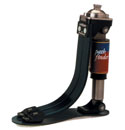
Pathfinder prosthetic foot
Submitted and manufactured by Ohio Willow Wood Co. (Mt. Sterling, OH)
Among the principal challenges faced by the developers of the Pathfinder
prosthetic foot was the need to simulate human gait with natural ankle
motion, says Jeff Doddroe of Ohio Willow Wood. The award-winning version of
the device included a number of significant engineering and design
accomplishments. Doddroe explains that "composite materials used in the toe
springs and the foot plate needed to have increased flexibility . . . without
sacrificing strength."
http://www.devicelink.com/mddi/archive/01/06/002a.html
Hearing Aid Uses Digital Perception Processing
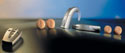
Claro and WatchPilot digital hearing instruments
Submitted and manufactured by Phonak (Warrenville, IL)
Hearing aid development has already attained two different goals: devices
have been made smaller, and communication in background noise has been
improved. "Today we want to make it easier to hear and understand speech in
quiet places, noisy places, and anywhere the wearer wants to hear," says
Laura Voll of Phonak AG. "We also want the sound quality to be as natural as
possible and control over the hearing aid as convenient as possible."
| Home | Previous | Contents | Next |